
China Supplier Risk Intelligence
We audit factories across every product category.
Whatever you source from China, the same risks apply.
The specific fraud patterns differ by industry. The underlying risks — misrepresentation, financial instability, subcontracting, certification fraud — are universal. Our framework adapts to your product category.
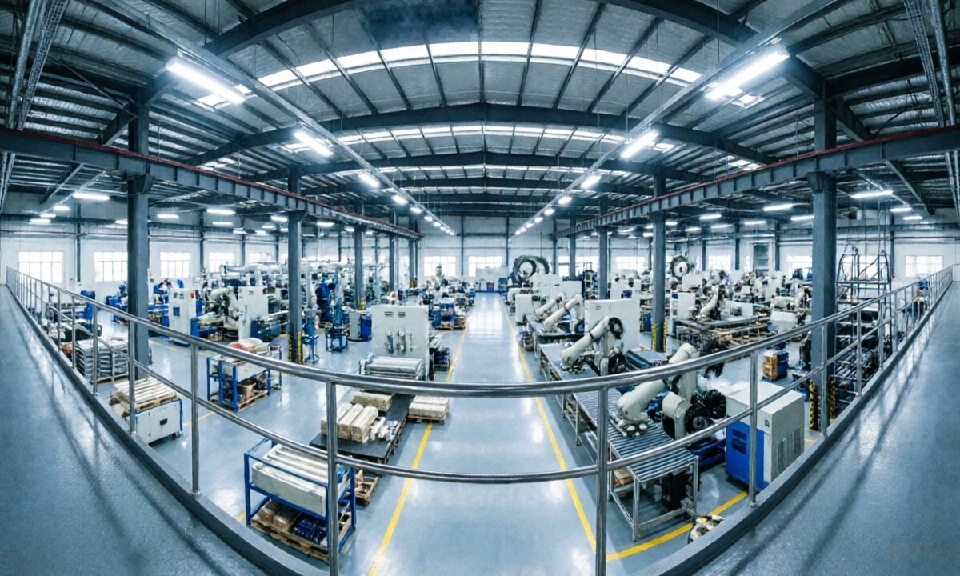
Beyond our three primary verticals.
Toys & Children's Products
The highest-stakes category for compliance. EN71 (EU) and ASTM F963 (US) certification misrepresentation is common. Phthalate and heavy metal test reports are routinely fabricated or borrowed from different product configurations. Factory financial stability is critical — a factory that closes mid-production on a children's product order creates regulatory as well as commercial exposure.
- Chemical compliance documentation — test reports verified against accredited lab records
- Small parts and choking hazard assessment
- Production process consistency — same factory, same specs, every batch
- Factory financial health — can they complete the production run?
Hardware & Industrial Components
Material specification fraud is the primary risk — particularly in fasteners, where grade markings (8.8, 10.9, 12.9) on bolts and screws frequently do not match actual tensile strength. Dimensional tolerances and surface treatment specifications are also commonly misrepresented.
- Material certification and mill test reports
- Tensile and hardness testing records
- Dimensional inspection process and equipment
- Plating / coating thickness verification
Sporting Goods & Outdoor Equipment
Safety-critical components — harnesses, carabiners, helmet shells, protective padding — require strict material and construction verification. EN and UIAA certifications are misrepresented at high rates. Factories producing for global outdoor brands operate on tight margins with strong incentives to optimise material costs.
- Certification validity — CE for PPE, EN standards, UIAA for climbing equipment
- Load-testing records and lab accreditation
- Material specification verification — fabric and structural components
- Stitching and construction quality for textile safety components
Kitchenware & Food Contact Products
Food contact material compliance — FDA 21 CFR, EU Regulation 10/2011, LFGB (Germany) — is the primary concern. Plastic formulations, stainless steel grades (304 vs. 201 or lower), and surface coatings all carry substitution risk. Non-stick coating composition (PFOA-free claims) requires underlying test report verification.
- Food contact compliance documentation and test report verification
- Stainless steel grade verification — XRF testing on-site where feasible
- Coating composition and migration testing records
- Production line separation from non-food-contact products
Medical Devices & Healthcare Products
Class I and some Class II medical devices require ISO 13485 quality management system verification, not just production capability assessment. Regulatory approval status — CE MDR, FDA 510(k) clearance — must be verified for the specific product and production facility, not assumed from a general company certification.
- ISO 13485 certification scope and last audit date
- Design and production documentation — DHF, DMR
- Regulatory approval verification for the specific product and facility
- Cleanroom and sterility controls where applicable
Our framework adapts to any manufacturing operation.
Our auditors have backgrounds in manufacturing credit analysis and industrial asset evaluation — not in a single product category. That breadth means we can apply our financial-grade due diligence framework to virtually any manufacturing operation in China.
If your product category isn't listed, contact us. We'll confirm whether we have prior audit experience in your category, or whether we'd bring in a category-specific technical consultant to support the audit.
The underlying questions are always the same: Is this factory who they say they are? Can they financially sustain your order? Is their production capability genuine? Will their management execute? The industry-specific knowledge shapes how we ask those questions — not whether we can answer them.
The minimum verification standard for any product category.
Background Check
Before any deposit or commitment. Verify the factory's legal entity, ownership history, and financial anomaly flags. Applicable to every supplier in every category.
Learn MorePre-Order Inspection
On-site before signing. Confirm real manufacturer vs. trading company, assess real production capability, and review category-relevant compliance documentation.
Learn MorePre-Shipment Assurance
Before the balance payment. AQL inspection, quantity verification, compliance document cross-check, and packaging confirmation. The minimum standard of protection for any order above $5,000.
Learn MoreWhatever you source from China —
verify it before you commit.
The fraud patterns differ by product. The verification framework doesn't.