
China Supplier Risk Intelligence
Where a compliant sample and a compliant production run are two different things.
Counterfeit components, certification misrepresentation, and production inconsistency are the defining risks of Chinese electronics sourcing. Our audits verify what's inside the product — not just what's on the label.
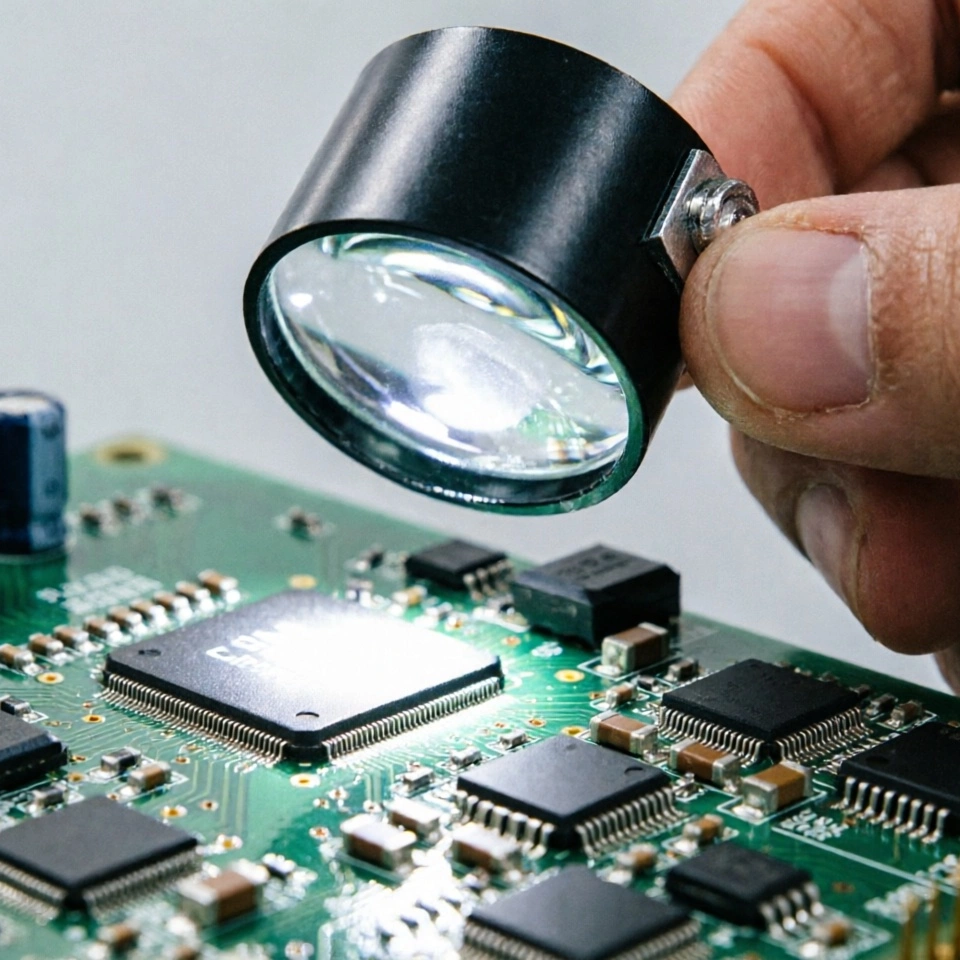
The electronics industry's anatomy of failure.
Counterfeit & Substandard Components
Capacitors, ICs, battery cells, and power components sourced from grey markets at discounts to authorised distributor pricing — indistinguishable to the naked eye, catastrophic under sustained use.
Certification Misrepresentation
CE, FCC, and RoHS documents misapplied, borrowed from different product configurations, or fabricated entirely. The mark on the label and the compliance behind it are frequently two different things.
Production Inconsistency
The sample you approved and the first run you inspected may both be genuine. The risk is the third, fifth, and tenth batch — after the factory has optimised costs by substituting components or quietly moving production to a lower-cost line.
The product looks identical. The components inside are not.
The electronics component grey market in China is enormous and sophisticated. Counterfeit capacitors, resistors, ICs, and battery cells — often indistinguishable from genuine parts to the naked eye — circulate through informal channels at significant discounts to authorised distributor pricing.
A factory under cost pressure will substitute grey-market components without disclosure. The product looks identical. It may even pass an initial functional test. But under sustained use, field return rates climb, and the liability follows the brand, not the factory.
Common substitution patterns: genuine Samsung/LG/CATL battery cells replaced with unbranded cells with falsified specifications; TI, Infineon, or ST ICs replaced with counterfeit parts; UL-listed power connectors replaced with unmarked equivalents; LED drivers substituted for lower-spec equivalents that meet testing conditions but fail under real-world thermal load.
-
Component sourcing documentation
Does the factory purchase from authorised distributors? Distributor invoices and reel labels requested and verified.
-
Incoming component inspection (IQC)
What testing is performed on arrival? Is there a reference database of genuine part markings for comparison?
-
BOM cross-reference
Components on the production floor compared against the brand and part number specified in the agreed BOM.
-
Storage conditions
Sensitive components (ICs, batteries) stored correctly? Humidity exposure and ESD violations are quality signals in their own right.
CE, FCC, RoHS — the most commonly misrepresented documents in Chinese export manufacturing.
For electronics, regulatory certifications are mandatory for market access in Europe, the US, and most developed markets. Three patterns appear repeatedly:
The borrowed certificate: The factory shows a CE Declaration of Conformity and a test report from a recognised lab. But the certificate was obtained for a slightly different product — different power supply, different battery configuration, different housing material — and applied to your product without re-testing.
The fabricated report: Test reports and DoC documents produced by the factory's internal team, with logos of recognised labs placed on documents those labs never issued. Sometimes detectably false; often requiring lab verification to identify.
The certification cliff: The factory holds a valid certificate expiring in 3 months. Re-certification requires design changes they haven't made. They're selling hard before the window closes.
-
CE / FCC verification
Cross-referenced with the issuing lab's public database where available; product model, configuration, and test date confirmed to match current production.
-
RoHS / REACH underlying documentation
Substance test reports reviewed (not just the declaration); testing lab accreditation verified.
-
Battery certification
UN38.3 for lithium batteries (mandatory for air freight); test scope and battery configuration confirmed to match current production.
-
Certificate expiry and renewal status
Certifications within 6 months of expiry flagged; renewal trajectory and design change requirements assessed.
Your third batch isn't your first batch.
In electronics manufacturing, the sample you approved and the first production run you inspected may both be compliant. The risk is the third, fifth, and tenth batch — after the factory has optimised its cost structure by substituting components, adjusting specifications, or quietly transferring production to a lower-cost line.
This is particularly acute for products with long repeat order cycles (months between inspections); high-volume, low-margin products where margin pressure creates constant component substitution incentive; and complex assemblies with many components, each a substitution opportunity.
-
Production records
Current batch specifications compared against the approved sample specification. Any deviation documented and questioned.
-
Engineering change control
Does the factory have a formal process requiring buyer approval before any component or specification change? Without one, substitutions are not tracked.
-
Component incoming inspection
Is there a system to detect and reject substitutions at point of receipt, before they reach the production line?
-
Quality consistency metrics
Defect rates and field return rates from previous buyers (where accessible) provide a historical production consistency baseline.
What a SourcInspecify electronics factory audit covers.
Production Capability
- SMT line count and equipment brands: Juki, Fuji, Panasonic vs. domestic imitations
- Reflow oven age and temperature profile records
- ESD controls: floor, workwear, workbench grounding
- Cleanroom / controlled environment grade: actual maintenance vs. claimed standard
Testing Capability
- Functional test equipment: proprietary fixtures vs. professional test systems
- Burn-in (ageing) testing: genuinely implemented, duration adequate?
- Environmental testing (temperature cycling, vibration): equipment present and records complete?
- Electrical safety testing (hipot, insulation): 100% product coverage verified?
Supply Chain & Components
- PCB supplier capability: layer count and precision appropriate for the design?
- Key component procurement channels: authorised distributor invoices and reel labels verified
- Sub-process outsourcing: which operations are subcontracted (wave soldering, testing, assembly)?
Financial & Operational Health
- Utility consumption vs. claimed production volume
- Social security enrollment vs. visible workforce
- Equipment ownership and financing: is key production machinery encumbered?
- Order book vs. stated capacity: is the factory over-committed?
The verification path for electronics sourcing from China.
Background Check
Before any engagement. Verify legal entity, ownership, and financial anomaly flags. For electronics, also checks whether the factory holds active certifications.
Learn MorePre-Order Inspection
On-site before commitment. Confirm genuine electronics manufacturer vs. trading company or assembly-only operation. Assess testing equipment and component sourcing.
Learn MoreIn-Progress QC
At 30–50% production completion. Verify components in use match the approved BOM. Detect substitutions while production can still be corrected.
Learn MorePre-Shipment Assurance
Before the balance payment. AQL inspection, compliance document verification (CE/FCC/RoHS against the actual goods), and packaging compliance check.
Learn MoreOne counterfeit battery cell can trigger a product recall.One fabricated CE report can close your European market.
Verify what's inside the product — not just what's on the label.